
Role: Principal UX Designer | Projects: Near-Net Analysis, Saas platform re-design (Near-Net-Analysis, Order Management, Deal Management & New Quote) – Redesign project.
Project Overview
At Connectbase—the digital marketplace for network connectivity—I led the end-to-end redesign of the NearNet Analysis platform, enabling telecom providers to strategically assess proximity-based expansion opportunities. The goal was to automate and simplify decision-making using geospatial data and ML-driven insights—empowering users to act on hidden, high-ROI locations with speed and confidence.
Design Thinking Process & Research Strategy
Guided by a user-centered design approach, I conducted in-depth research to deeply understand our users and their pain points. This included:
- User persona development based on behavioral segmentation
- Empathy mapping to visualize user motivations, frustrations, and goals
- User interviews, client feedback sessions, and online forum analysis
- Cross-referencing customer support tickets to identify repetitive friction areas
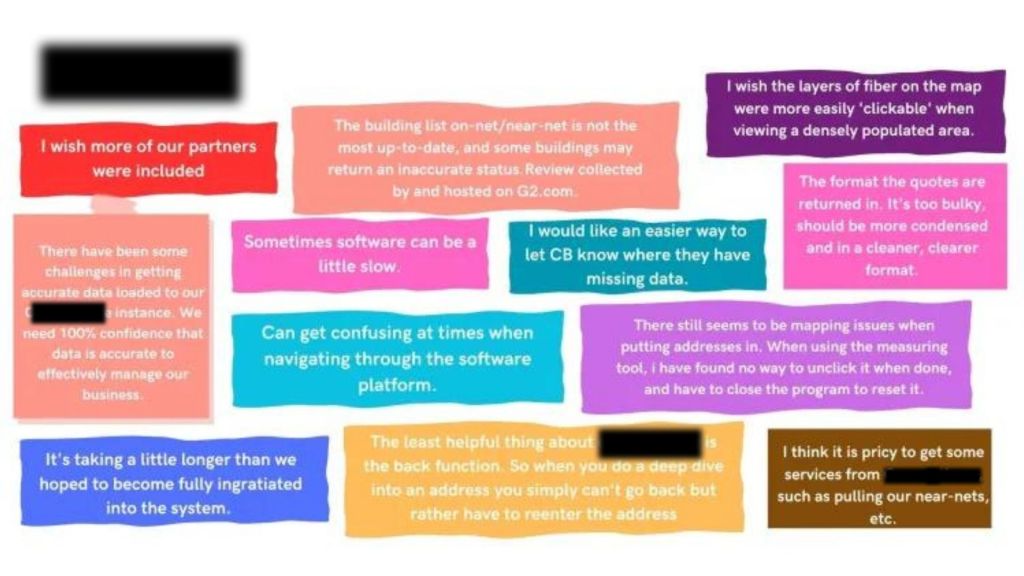
These insights revealed that users struggled with trust in the data, difficulty translating technical outputs into actions, and overwhelming interfaces that slowed decision-making. I reframed the problem as:
“How might we help users confidently identify and act on near-net opportunities without needing deep geospatial expertise?”
User Persona:

Empathy Map:

User Research – Client Interview:

User Research – Online Feedback:

User Research – Customer’s Feedback:
Design Strategy, Decisions & Execution
Legacay platform
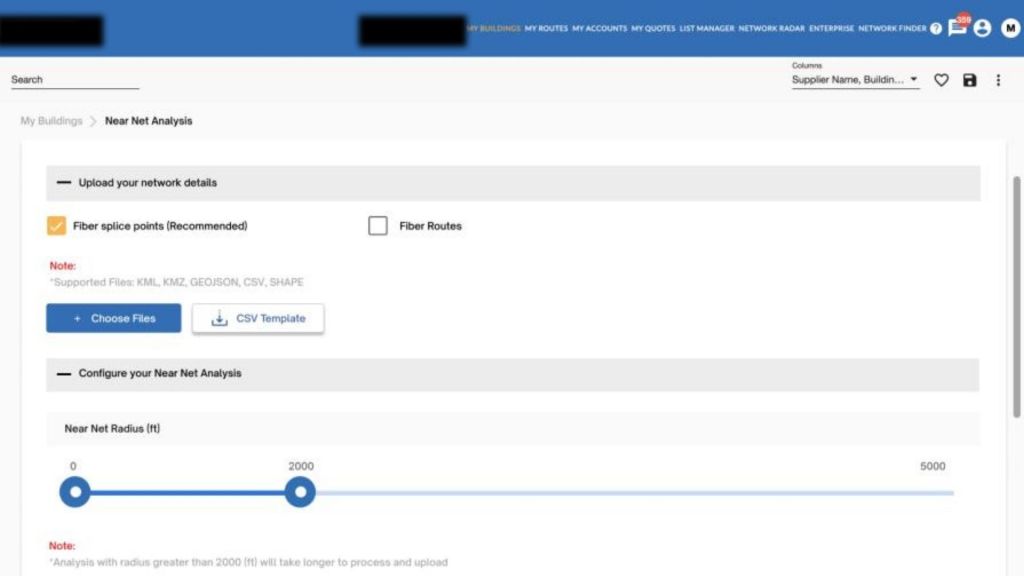
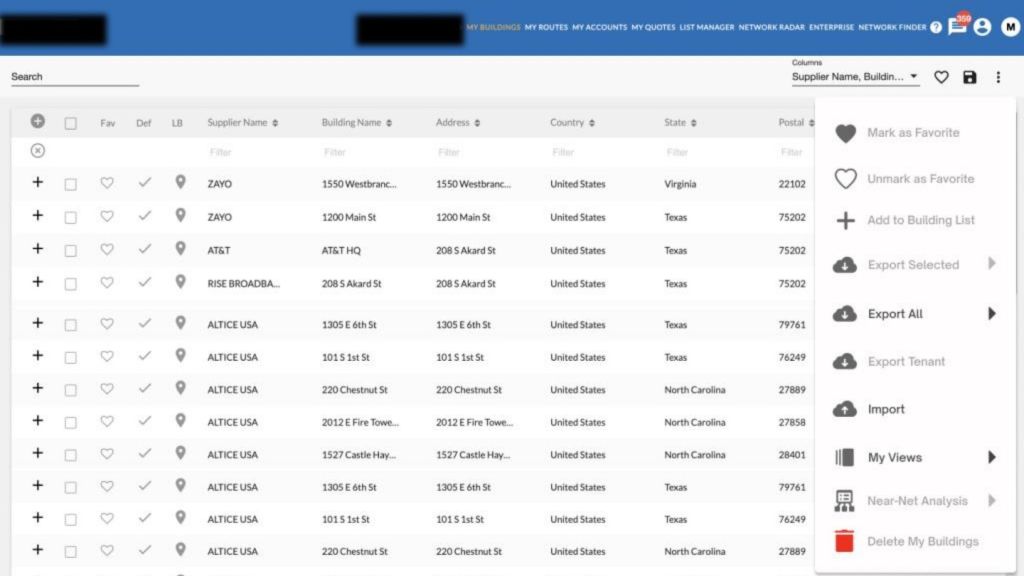
To address this, I led workshops with Product and Engineering, explored multiple design directions, and delivered a clear solution path:
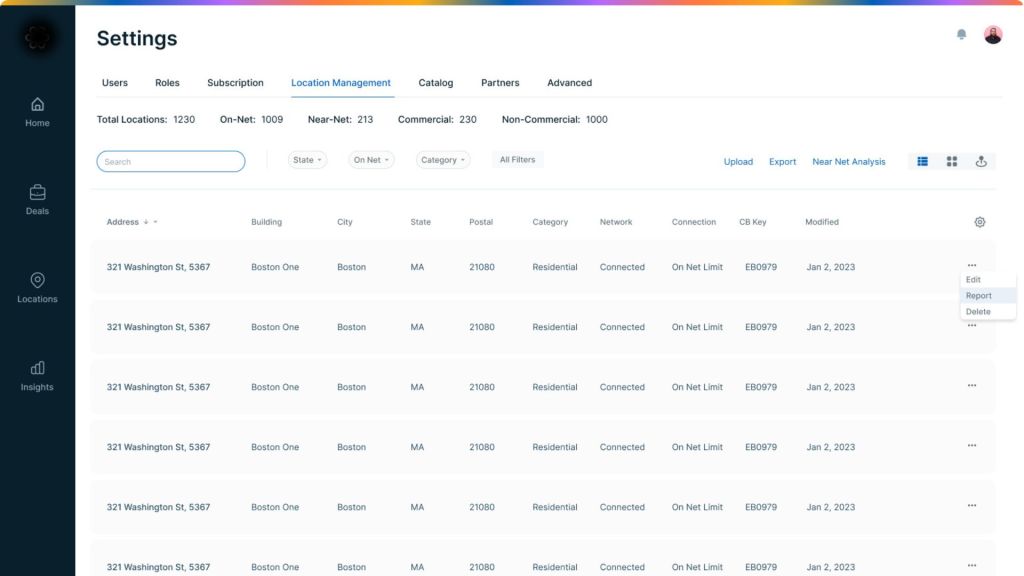
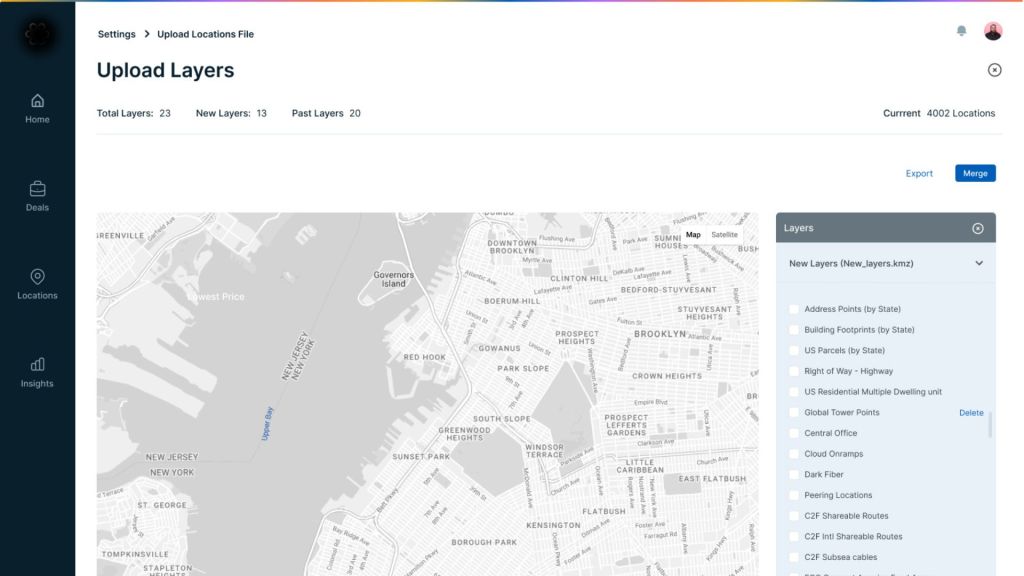
- Replaced static tables with interactive map visualizations that aligned with spatial thinking
- Used Right-of-Way (ROW) over Line-of-Sight (LOS) to deliver more realistic time/cost estimates for build planning
- Created modular UI components and ensured full WCAG 2.1 compliance for accessibility
- Produced streamlined user journeys, wireframes, and prototypes using Figma, testing iteratively with target users
- Developed educational microcopy and visual cues to improve clarity and reduce onboarding friction
This solution was implemented collaboratively within an Agile environment, where I actively contributed during stand-ups, retros, and sprint reviews.
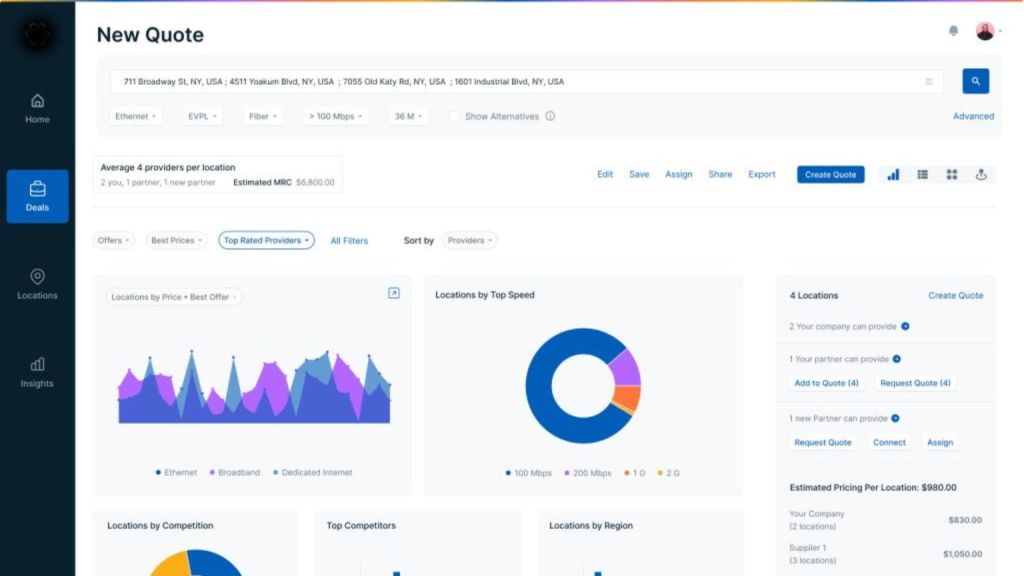
Saas Platform Re-design
Impact & Strategic Outcomes
- Cut analysis time from days to hours, significantly accelerating provider decision cycles
- Boosted confidence and engagement through transparent, human-centered UX
- Enabled client independence by designing a self-serve experience that reduced reliance on sales, support teams and manual analysis
- Supported 3x growth in client sales team productivity due to improved tool reliability and usability
Reflection
This project reflects my ability to tackle complex, data-heavy design challenges using strategic thinking, research-driven insights, and scalable design systems. I brought together technical constraints, business needs, and user empathy to drive measurable impact—while mentoring the team on design rigor and craftsmanship every step of the way.
Disclaimer: Due to companies confidentiality , I can not provide all the screens designed, wireframes and full prototypes at this time.
 itsmaryamsalam.com