
Overview:
Connectbase is a SaaS platform that empowers network providers to buy and sell connectivity smarter. By combining powerful location-based data with automation, it simplifies how providers discover opportunities, plan builds, and grow their networks efficiently.
My Role at Connectbase:
As the Product Designer, I led the end-to-end design process for enhancing the Near-Net Analysis experience. I collaborated closely with product managers, engineers, and stakeholders to streamline workflows, improve data visualization, and create a more intuitive, self-guided interface that helps users make faster, data-driven decisions.
Goal of the Project:
To improve the accuracy and efficiency of Near-Net Analysis, enabling network providers to quickly identify high-value expansion opportunities, reduce manual effort, and make smarter, data-driven decisions for network growth.
Project Team Setup:
- Cross-functional team including Product Manager, Engineers, Data Analysts, and UX/UI Designer (my role)
- Regular collaboration with stakeholders and business development team for alignment on goals and requirements
- Agile workflow with weekly sprints and design reviews
Main Responsibilities:
- Led end-to-end UX/UI design for the Near-Net Analysis tool
- Conducted user research and interviews to inform design decisions
- Created wireframes, prototypes, and high-fidelity mockups
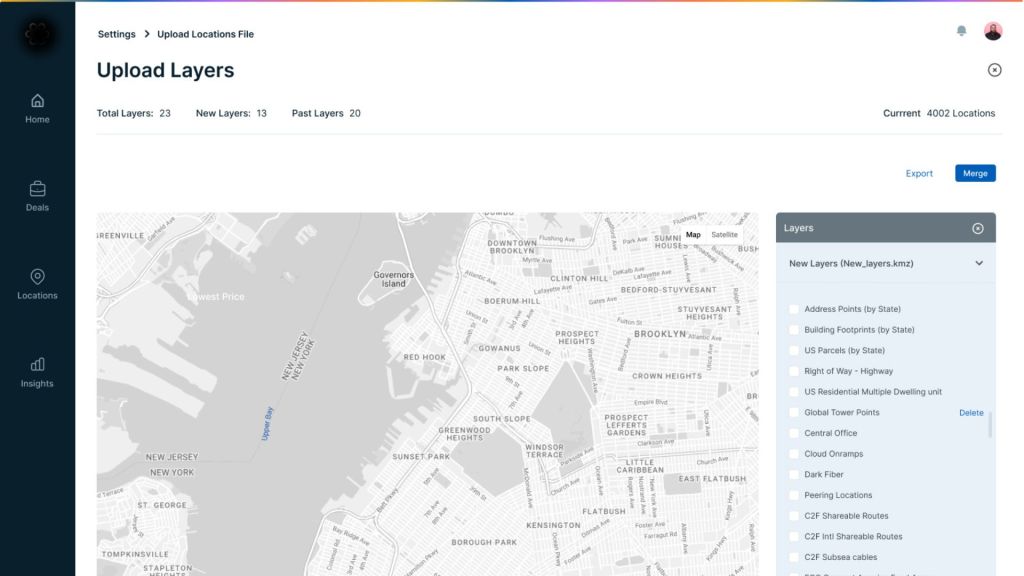
- Designed data visualizations for easy interpretation of Line-of-Sight and Right-of-Way analyses
- Collaborated with engineers to ensure feasibility and smooth implementation
Project Scope & Timeline:
- Scope: Redesign and automate Near-Net Analysis for self-guided, accurate insights
- Timeline: 3-month project from discovery to delivery
- Deliverables included user flows, wireframes, interactive prototypes, and final UI designs
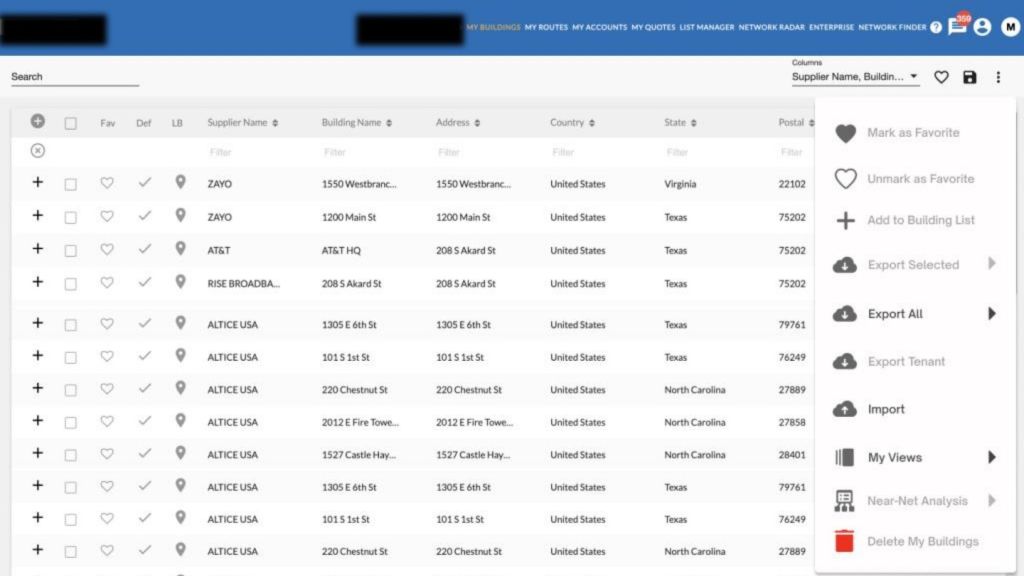
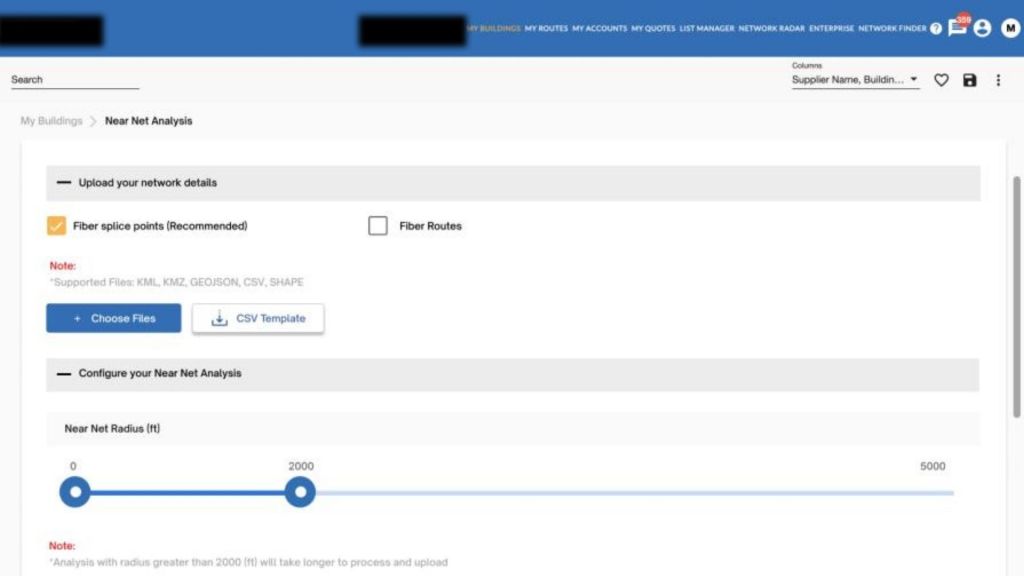
Current design (Before):
DESIGN APPROACH

Problem Statement: Customers are finding it difficult to get a distance-based assessment of buildings in close proximity to a network service provider’s existing routes.
User Persona:

Empathy Map:

DISCOVERY
Disclaimer: Due to companies confidentiality , I can not provide all the screens designed, wireframes and full prototypes here.
User Research – Client Interview:

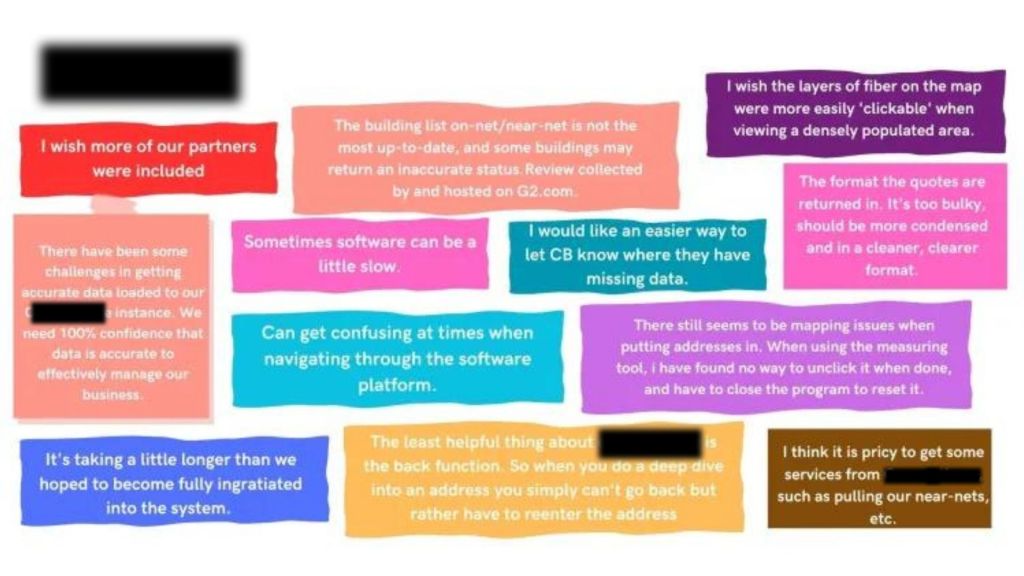
User Research – Online Feedback:

User Research – Customer’s Feedback:
DESIGNING THE SOLUTION
Disclaimer: Due to companies confidentiality , I can not provide all the screens designed, wireframes and full prototypes here.
Design Process:
The solution was developed through a structured design process, starting with research and sketching to explore ideas and workflows. Key concepts were then translated into low-fidelity wireframes to test layout and functionality. After iterations based on feedback, high-fidelity prototypes were created, including detailed UI elements and data visualizations, ensuring a seamless and intuitive user experience before handoff to engineering
Solution:
1. Strategic Growth & Speed
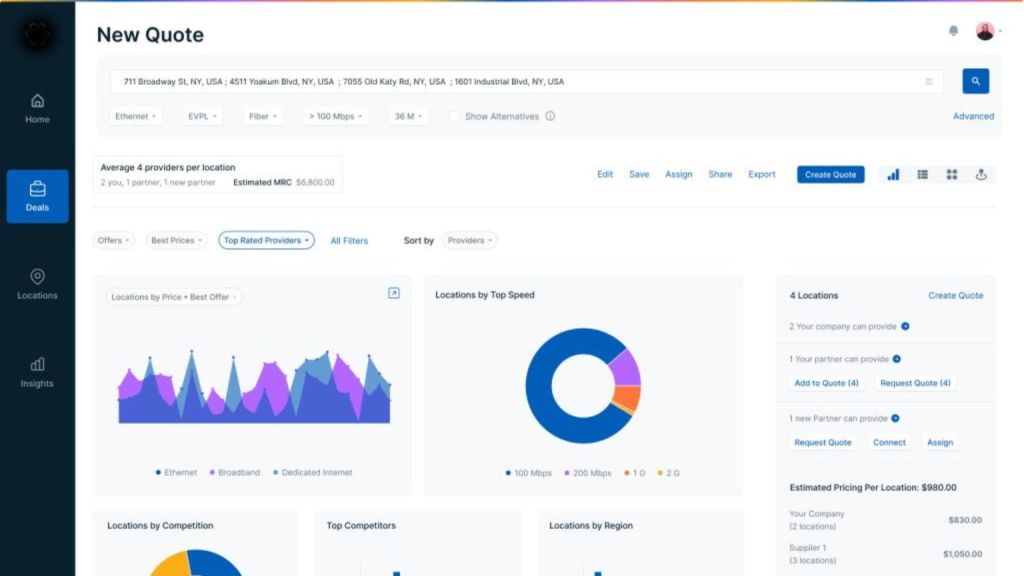
The new Connectbase platform empowers users to plan network builds strategically for maximum ROI — turning insights into action in minutes, not days. It also provides a clear, data-driven roadmap for network expansion and future opportunities.
2. Smarter NearNet Analysis
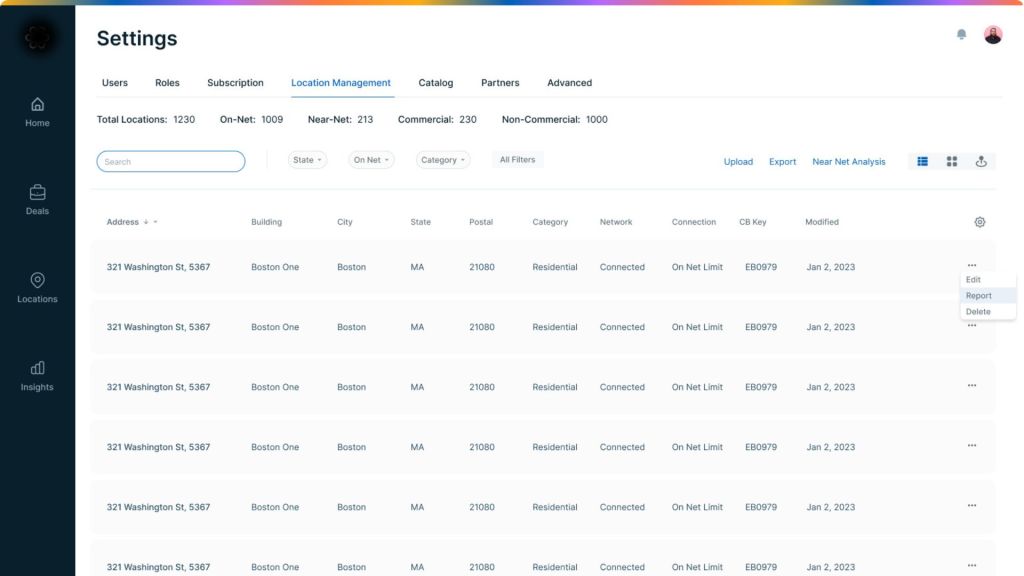
Building on Connectbase’s powerful location-based NearNet Analysis, the platform introduces a self-guided, automated Right-of-Way (ROW) process. ROW analysis accounts for real-world obstacles like rivers and railroads, offering precise cost and time estimates that outperform traditional Line-of-Sight methods.
3. Empowered Sellers & Revenue Growth
With instant, automated insights, sellers can confidently expand their building lists and promote more opportunities. The result: faster decision-making, better response rates, happier customers, and stronger revenue growth.
TESTING
Usability Testing:
We conducted usability testing with target users to evaluate the redesigned Near-Net Analysis tool. Participants completed key tasks, such as identifying near-net buildings and interpreting Right-of-Way data, while we observed pain points and collected feedback. Insights from these sessions informed refinements to the interface, improved data visualizations, and ensured the tool was intuitive, efficient, and actionable for users.
Usability Testing Results:
The testing revealed that users could navigate the Near-Net Analysis tool more efficiently and interpret Right-of-Way data with greater confidence. Key improvements included clearer data visualizations and simplified workflows, which reduced task completion time and minimized errors. Overall, participants reported higher satisfaction and felt empowered to make faster, data-driven decisions.
FINAL DESIGN: New Saas Platform Re-designed (Now):
What I Learned:
This project was an invaluable experience in designing a complex, data-driven platform. It taught me how to turn technical analyses into user-friendly insights and reinforced the importance of iterative design and collaboration. I also deepened my understanding of creating solutions that balance user needs with business objectives.
Key Takeaways:
- Strengthened skills in designing complex, data-driven tools for professional users
- Gained experience translating technical analyses into clear, intuitive visualizations
- Learned the value of iterative testing and incorporating user feedback to improve usability
- Enhanced collaboration with cross-functional teams, including product managers and engineers
- Reinforced the importance of balancing user needs with business goals for impactful solutions
Thank you.
 itsmaryamsalam.com