

Tools: Figma, Miro, Usertesting.com, sketch
Team: 1 Lead UX Designer, 1 Junior UX Designer, 1 UX Architect, 1 Project Manager
My Role: Led UX Design, Led UX Research, Wireframing, Mock up design, Prototyping, Design Presentation to stakeholders/clients, Handover and delivery support.
Duration: 8 months
Summary/Introduction:
In an era marked by technological advancements, Medicure, a pioneering healthcare company, strives to revolutionize accessibility to medical services for individuals residing in remote areas.
Problem statement: Recognizing the challenges faced by these underserved communities, Medicure embarked on a transformative journey to create a user-centric solution.
How might we: This UX design case study delves into the meticulous process undertaken to enhance the healthcare experience for remote patients, emphasizing inclusivity and ease of access.
Define success: Easy to use, comprehensive medical results, fluent cross-communication and accessible

Design Process:
Embracing an iterative and user-centric design approach, Medicure employed the Double Diamond model. The process involved:
- Define:
- Narrowed down design challenges and formulated design principles.
- Established a roadmap for feature development based on user priorities and pain points.
2. Discover:
- Synthesized research findings to define key problem statements and opportunities.
- Conducted collaborative workshops with stakeholders to align on goals and vision.
3. Develop:
- Generated low-fidelity prototypes to visualize initial design concepts.
- Conducted usability testing to gather feedback and refine the user interface.
4. Demonstrate:
- Iteratively developed high-fidelity prototypes, incorporating visual design elements.
- Collaborated closely with developers to ensure seamless integration of the solution.
This comprehensive research and design process laid the groundwork for Medicure’s commitment to delivering a healthcare platform that transcends geographical barriers, making quality medical services accessible to all.
Research and Analysis:
The foundation of the UX design process for Medicure began with extensive research and analysis, aiming to understand the unique needs, limitations, and aspirations of individuals in remote areas. Primary and secondary research methodologies were employed, encompassing interviews, surveys, and data analysis of healthcare disparities.
Key Steps:
- User Persona Development:
- Identified and created detailed user personas representing the diverse demographics and healthcare needs of individuals in remote communities.
- Explored factors such as technological literacy, prevalent health concerns, and existing healthcare infrastructure.
2. Journey Mapping:
- Mapped the patient journey from symptom recognition to seeking medical advice, diagnosis, and follow-up care.
- Pinpointed pain points and areas of improvement, recognizing the challenges posed by geographical remoteness.
3. Competitive Analysis:
- Conducted a thorough examination of existing telehealth platforms, focusing on features, usability, and adaptability to remote settings.
- Extracted insights to inform Medicure’s strategy in delivering a distinctive and effective healthcare solution.
4. Accessibility and Inclusivity Audit:
- Evaluated the accessibility of healthcare information and services in remote areas.
- Ensured that the design solution caters to diverse needs, considering factors such as language, cultural nuances, and varying levels of technological infrastructure.
5. Technology Assessment:
- Investigated the technological landscape in remote regions, addressing challenges like network connectivity and device availability.
- Explored potential partnerships with local providers to optimize service delivery.
Solution:
- Clear design (Prioritize visual design and Information Architecture)
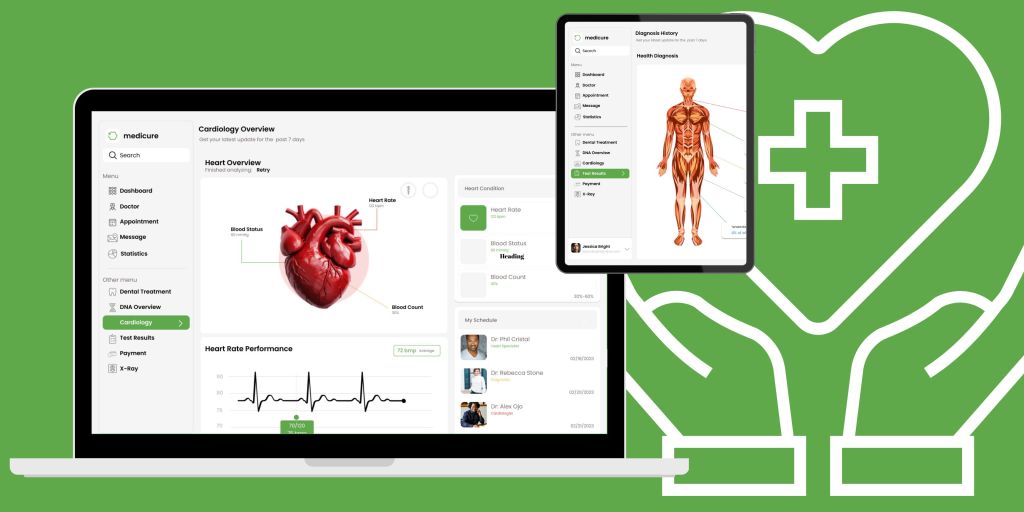
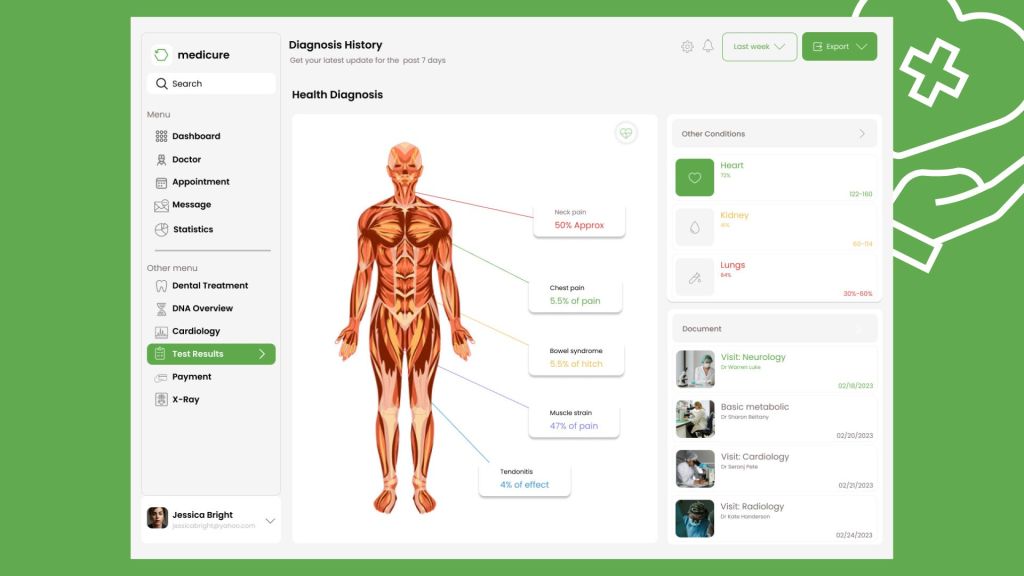
- Ability for local consultants to upload documents, analysis and notes
- Calendar access for easy scheduling
- Live body health tracker for symptoms recognition, medical advice and follow-ups
Wireframe:
I transformed the outlined specifications for each page into preliminary wireframes, utilizing the Medicure library. The primary objective behind crafting these low-fidelity wireframes was to breathe life into the approved UX blueprints and visualize the structure, as well as the overall look and feel of the pages.
This phase provided an opportunity to assess the suitability of various components, identifying any that might not perfectly align with the design objectives. By pinpointing such components, we could strategize replacements with more fitting alternatives. Following the creation of the wireframes, I would conduct a presentation for the client, guiding them through the structural aspects and addressing any inquiries they might have.

Client Review and Iteration:
Client Review: After finalizing both the visual elements and copy, along with the completion of the final wireframes, I would proceed to present the comprehensive design and wireframes to our client at Medicure. Subsequently, the client would provide valuable feedback on the ultimate design and wireframes.
Iterations: Frequently, clients would submit requests for iterations on specific sections of the designs following internal discussions on their end. Upon completing the iterations, we obtained final approval from the client for the wireframe design. Subsequently, we transmitted the approved wireframe designs, along with all associated assets and documents, to the development team for the construction and launch of the site page.

Final Design:



Thank you for reading.
 itsmaryamsalam.com